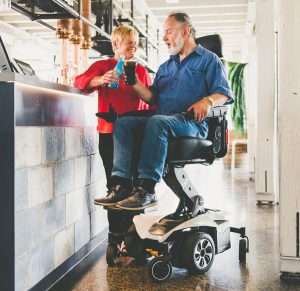
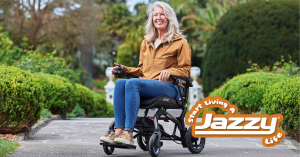
At Pride Mobility Australia, our focus has always been on supporting safe, functional mobility through thoughtful design and clinically informed product development. This month, we’re shining a light on the clinical benefits of Pride products and exploring why one scooter or powerchair may be recommended over another depending on an individual’s needs.
Mobility is never one-size-fits-all. The right solution depends on a person’s physical capacity, environment, endurance, and confidence, which is why clinicians, dealers, and support teams carefully match users with products that best support their daily life.
Why product selection matters clinically
When recommending a mobility device, clinicians consider more than just speed or size. Key clinical considerations often include:
- Postural stability and comfort
- Upper limb strength and fatigue
- Balance and vibration sensitivity
- Indoor versus outdoor environments
- Transport and storage requirements
- Cognitive load and ease of use
Pride’s broad range allows these factors to be addressed with precision rather than compromise.
Travel scooters: supporting independence with minimal load
Lightweight travel scooters, such as those in the Go Go range, are often recommended for users who need short-distance community access and regular transport in a vehicle. Clinically, these scooters can support:
- Reduced lifting strain through lightweight or lithium designs
- Simple controls that minimise cognitive demand
- Compact turning for indoor and retail environments
For someone with limited strength or endurance, choosing a lighter transportable scooter over a heavier full-size model can significantly improve confidence and independence.
Suspension and comfort: reducing pain and fatigue
Scooters equipped with suspension systems, such as CTS Suspension, are frequently recommended for users who experience:
- Joint sensitivity
- Lower back pain
- Discomfort from vibration on uneven surfaces
By reducing vibration transfer through the frame, these scooters support longer, more comfortable use, which can be critical for maintaining community participation without increasing pain or fatigue.
Manoeuvrability vs stability: matching the environment
Indoor environments often demand tight turning and precise control, while outdoor use prioritises stability and terrain handling.
- Zero-turn and mid-wheel designs are clinically beneficial for users navigating tight indoor spaces or busy community settings
- Larger outdoor scooters with wider wheelbases and higher ground clearance are better suited to uneven paths, longer distances, and varied terrain
Recommending the right configuration helps reduce the risk of collisions, loss of confidence, or unnecessary physical strain.
Powerchairs: function beyond mobility
Powerchairs extend clinical benefits beyond movement alone. Features such as powered seating, compact indoor handling, or rugged outdoor performance support:
- Improved access to environments and social participation
- Reduced reliance on carers for mobility
- Safer transfers and positioning throughout the day
Selecting the correct powerchair can directly impact a user’s independence, comfort, and quality of life.
The value of choice
The strength of the Pride range lies in its diversity. By offering travel, mid-size, full-size, bariatric, and powerchair solutions, clinicians and dealers can recommend devices that are fit for purpose, rather than asking users to adapt to a product that doesn’t fully meet their needs.
This month, we’re continuing the conversation around why the right mobility solution matters — not just for getting from A to B, but for supporting long-term health, confidence, and participation.
If you’re a clinician, dealer, or support professional, we encourage you to explore the full Pride range and consider how different features translate into real clinical benefits for the people you support.
Mobility, when matched correctly, can be life changing.