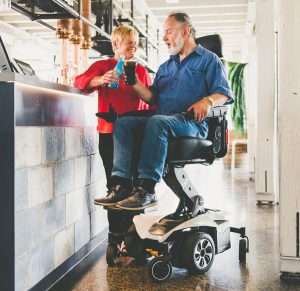
Buying a mobility scooter is about more than range and top speed. If it can’t turn in your hallway, squeeze into the lift at your local shops, or clear the footpath outside your favourite café, it won’t earn its keep. Sizing a mobility scooter correctly — for your home, your lift, and the footpaths you use every day — is the difference between a device that opens up your world and one that gathers dust in the garage.
At Pride Mobility, we’ve spent over 25 years helping Australians match the right scooter to the spaces they actually move through. This guide walks you through the measurements that matter, the compact models built for tight environments, and how to choose confidently the first time.
Why Sizing a Mobility Scooter Correctly Matters
A scooter that’s too long won’t fit in a standard lift. One with a wide turning radius can’t manoeuvre around supermarket end-caps or café tables. And a heavy scooter can be a struggle to lift into a car boot for weekend outings. Getting the dimensions right up front saves you from returns, retrofits, and frustration — and it means you’ll actually use your scooter for the errands, outings, and appointments that matter to you.
Key Measurements to Check Before You Buy
Before comparing models, grab a tape measure and check these four things in the places you visit most.
Lift and Doorway Width
Most residential and commercial lifts in Australia have a door opening of roughly 800–900mm, though older buildings can be narrower. Measure your building’s lift and your own front door frame, then compare against the scooter’s overall width (not just the seat width — include the mirrors and armrests).
Turning Radius and Aisle Width
Turning radius tells you the smallest circle a scooter needs to turn on the spot. A tighter turning radius means easier three-point turns in supermarket aisles, medical waiting rooms, and narrow hallways. We group our scooters by turning radius on our turning radius guide — models under 100cm are your best bet for tight retail environments.
Footpath and Kerb Clearance
Suburban footpaths, shopping strip crossings, and driveway crossovers vary in width and gradient. Look for a scooter with a stable wheelbase and enough ground clearance to handle uneven kerbs and driveway lips without scraping.
Weight and Portability
If you’re loading your scooter into a car boot, taking it on public transport, or storing it in an apartment, weight matters as much as width. Many of our lightweight and folding models are purpose-built for this — browse the full range in our portable mobility category to compare options designed for easy transport and storage.
Compact Scooters Built for Tight Spaces
These models are engineered with shops, lifts, and footpaths in mind — smaller footprints, tighter turning circles, and lighter builds without compromising stability.
Go Go Carbon
Best for: Riders who want a lightweight scooter without sacrificing stability.
Built with a carbon fibre frame, the Go Go Carbon is one of our lightest portable scooters, making it easy to lift into a car boot or manoeuvre through tight retail spaces. It disassembles into manageable pieces for travel and storage.
- Range Per Charge: <16 km/h
- Weight Capacity: 136 kg
- Turning Radius: 134.6 cm
Its light build means less strain for you or your carer when loading and unloading. Learn more about how carbon fibre is shaping mobility’s future.
Go Go Elite Traveller 2
Best for: Everyday errands with easy disassembly.
The Go Go Elite Traveller 2 breaks apart into lightweight sections for transport, while still offering the stability and comfort you need for daily use around the shops and neighbourhood. It’s a proven, popular choice for users who want reliability without bulk.
- Range Per Charge: <16.7 km
- Weight Capacity: 136 kg
- Turning Radius: 94 cm
It’s a dependable option when you need a scooter that fits into your life, not the other way around.
Go Go LX with CTS Suspension
Best for: Extra comfort on mixed footpath surfaces without losing manoeuvrability.
The Go Go LX with CTS Suspension pairs a compact frame with Comfort-Trac Suspension (CTS) — a suspension system that smooths out kerb cuts, cracked footpaths, and uneven pavers so your ride feels steady even on imperfect terrain.
- Range Per Charge: <16.9 km
- Weight Capacity: 136 kg
- Turning Radius: 116.2 cm
You get the manoeuvrability of a compact scooter with a noticeably smoother ride between destinations.
How to Choose the Right Size for Your Lifestyle
Ask yourself these questions before you decide:
- Where will you use it most? Indoor shopping centres and lifts call for a tighter turning radius. Suburban footpaths and driveways call for stability and ground clearance.
- Will you need to transport it? If it’s going in a car boot regularly, prioritise folding or disassembling models like the Quest or Go Go Carbon.
- How wide are your daily doorways and lifts? Measure first, then compare against each model’s overall width.
- Do you need extra comfort for longer trips? Suspension features, like those on the Go Go LX, make a noticeable difference on longer outings.
- Who else needs to lift or load it? If a carer or family member assists with transport, lighter carbon fibre builds reduce physical strain.
For a broader comparison of features and lifestyle fit, see our guide on how to choose the right mobility scooter for your lifestyle and 3 things to consider when purchasing a mobility scooter.
Frequently Asked Questions
Do I need a licence to ride a mobility scooter in Australia?
No licence is required to operate a mobility scooter on footpaths in Australia, though road rules around speed and pedestrian right-of-way still apply. Check your state or territory’s specific regulations for any local requirements.
Can I take my mobility scooter on a plane?
Many of our portable models, including the Quest and Go Go Carbon, are designed with airline travel in mind. Battery type and dimensions affect what airlines will accept, so check with your airline directly. Read more in our guide on bringing your mobility scooter on a flight.
How long does the battery last, and how do I maintain it?
Battery life varies by model and usage patterns, such as terrain and frequency of use. We’ve put together a detailed guide on getting the most out of your Pride Mobility scooter battery to help you maximise longevity.
Where can I see these scooters in person before buying?
We work with stockists across Australia and New Zealand who can help you test-ride and measure models against your own doorways and lifts. Find your nearest location with our stockist finder.
Finding Your Perfect Fit
The right mobility scooter should move with you through shops, lifts, and footpaths without a second thought — not force you to plan your day around its limitations. Whether you need the fold-flat convenience of the Quest, the featherweight build of the Go Go Carbon, or the smooth ride of the Go Go LX with CTS Suspension, our portable mobility range has an option sized for your everyday spaces.
Learn more about our approach to mobility solutions on our About Us page.
LIVE YOUR BEST with Pride Mobility.